
Reactive Dog Training in Sutton Coldfield
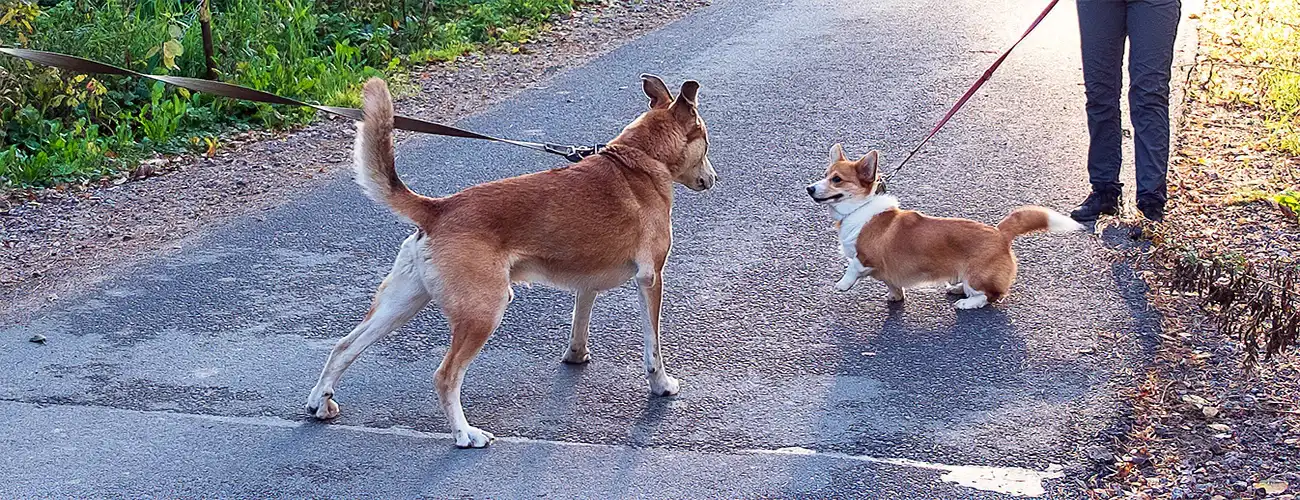
Home help for dogs that bark, lunge or overreact
If your dog barks at other dogs, lunges at people, reacts to passing traffic, or becomes difficult to control on walks, you're not alone. It's more common than you may think. Living with a reactive dog can be very stressful, particularly when every walk feels unpredictable, or you find yourself avoiding other dogs and busy places.
Bark Busters provides home dog behaviour training in Sutton Coldfield and surrounding areas, helping owners understand their dog’s behaviour and work towards calmer, more manageable responses.
Whether your dog reacts to other dogs, unfamiliar people, visitors, bicycles, or everyday noises, we tailor training to your dog, your home environment, and the situations you find most challenging.
What is dog reactivity?
Dog reactivity describes an exaggerated response to a particular trigger. A reactive dog may bark, growl, pull hard on the lead, lunge, whine, freeze, or struggle to settle when something makes them uncomfortable or overexcited.
Reactivity can have several underlying causes. Fear, frustration, uncertainty, overarousal, or past negative experiences all shape your dog's behaviour. It doesn't necessarily mean a dog is aggressive, though reactive behaviour can sometimes pose a safety risk.
Understanding why your dog reacts is an important first step towards managing the behaviour appropriately.
What types of reactivity can we help with?
Reactivity towards other dogs
Does your dog bark, growl or lunge when another dog approaches? Do walks become difficult whenever you see a dog in the distance?
Training can help you recognise your dog's early warning signs, manage the distance between your dog and its triggers, and practise more appropriate responses in situations your dog can cope with.
Reactivity towards people and visitors
Some dogs become distressed or overexcited around unfamiliar people, visitors to the home or people approaching them on walks. They may bark, jump, retreat, growl or attempt to keep people away.
Understanding your dog's response and managing introductions carefully may help create a more predictable environment for both your dog and the people around them.
Lead reactivity and lunging on walks
A dog that reacts on the lead may feel restricted, frustrated or threatened when another dog or person comes too close. Pulling, barking and lunging can make everyday walks exhausting.
Training can help you handle the lead better, manage your dog's attention, manage distance, and build calmer walking routines. The aim is to help you manage encounters more confidently rather than repeatedly placing your dog in situations they cannot handle.
Reactivity to traffic, bicycles and everyday movement
Some dogs react to cars, vans, bicycles, runners or people moving quickly. Others become distressed by particular sounds or activity around the home.
Identifying the specific triggers and working at a manageable level can help you develop a more effective plan for everyday situations.
Why is my dog reactive?
There’s no single explanation for why a dog is reactive. Common contributing factors include:
Fear or anxiety - Your dog may be trying to increase the distance from something they perceive as threatening.
Frustration - Your dog may want to approach another dog or person but feel overwhelmed by the restriction of the lead.
Lack of confidence - Unfamiliar environments or unpredictable encounters may be difficult for your dog to manage.
Overexcitement - Your dog may struggle to regulate their response when faced with stimulating sights, sounds or movement.
Previous experiences - An unpleasant past encounter or repeated stressful situations may shape how your dog responds in the future.
Medical problems can also affect behaviour. If your dog's reactivity starts suddenly, worsens unexpectedly or appears linked to pain, arrange a veterinary assessment.
How Bark Busters reactive dog training works
Bark Busters Home Dog Training focuses on understanding your dog's behaviour in context, helping you communicate better and develop easy, practical strategies for everyday life.
Understand your dog's triggers - We look at the situations in which your dog reacts, what happens immediately beforehand and how your dog behaves during and after an incident. This helps build a clearer picture of the problem.
Recognise early warning signs - Changes in body posture, staring, stiffening, turning away, lip licking or attempts to move away can all provide useful information. Noticing these signs early may help you intervene before your dog becomes overwhelmed.
Develop a tailored training plan - Your plan should reflect your dog's needs, the triggers involved and your household circumstances. Training may include changes to everyday routines, appropriate lead handling, safer management and practising alternative responses at a suitable distance from triggers.
Practise in manageable situations - Progress is often easier when a dog is not repeatedly exposed to situations that trigger a severe reaction. Work gradually, leaving enough distance and time for your dog to keep learning.
Build consistency at home and outdoors - You will learn to apply the agreed approach in everyday situations, including preparing for walks, managing visitors, and responding when you unexpectedly encounter a trigger.
The aim is to help you make informed, consistent decisions and work towards calmer, safer experiences over time. Every dog is different, so progress and timescales will vary.
What should I do if my dog barks or lunges at other dogs?
If your dog reacts during a walk, prioritise safety and don't try to force an interaction.
Create distance: calmly move away from the trigger if you can do this safely.
Avoid forced greetings: your dog isn't comfortable meeting another dog or person, so don't force it. Talk to us for further advice on our training programmes.
Watch for early signs: it's important to notice any staring, tension, freezing, or changes in body posture to pre-empt a reaction.
Choose manageable walks: quieter routes and times can reduce stressful encounters for your dog while you work on training.
Use secure equipment: always ensure your dog's collar or harness and lead are suitable, correctly fitted and secure.
Avoid punishment or confrontation: these can increase fear or arousal in some dogs and may make the situation worse and harder to manage.
If there is a risk of biting, talk to us about our training support packages to obtain further help. Keep your dog at a safe distance from children, unfamiliar people and other animals while you arrange support. A suitable basket muzzle may form part of a safety plan, with our professional guidance where needed.
Can reactive dog behaviour improve?
Many of Bark Busters clients report great success, but there is no guarantee. Many dogs can learn more manageable responses when you understand their triggers and introduce training at a sensible pace. Remember that improvement doesn't necessarily mean your dog will always enjoy meeting every dog or person. For some dogs, success means passing at a safe distance, recovering more quickly after seeing a trigger, or enjoying walks without becoming overwhelmed.
The priority is improving safety and quality of life with realistic goals based on your individual dog.
Take the first step towards calmer walks
You don't have to avoid every walk, worry about every encounter, or guess how to respond when your dog reacts.
Contact Bark Busters to discuss our home dog behaviour training packages in Sutton Coldfield and find out what support may be suitable for your dog.
Get in touch today to discuss your dog's reactivity and the next steps towards safer, more manageable walks.
Constant barking and no control
I was having problems with my dog Alfie for instance constant barking at visitors coming to the home and making the experience really stressful for everyone, protective over people in the home and barking at anyone that came near, and I didn’t seem to have any control. Sarah came along and talked to me about having a better relationship with Alfie and basically educating me to have control so Alfie can start to respect me and listen to me which he hasn’t been doing previously. After about 3 hours he was a different dog! Even in that short time there was such a difference in him and I know that moving forward the training and consistency is going to make such a difference for Alfie and everyone else. Sarah is so knowledgeable and knows exactly what she is doing and made me feel that actually with persistence Alfie will change. I’m looking forward to our next session with Sarah.
Emma Fox - Sutton Coldfield

Frequently Asked Questions on Dog Reactivity
Is there a difference between a reactive dog and an aggressive dog?
Reactivity describes an intense response to a trigger, such as barking, lunging or growling. Aggression refers to behaviour intended to threaten or cause harm, although it can be difficult to determine a dog's motivation from behaviour alone. Reactivity and aggression can overlap, so it's important to assess each dog individually.
Can you help a dog that barks and lunges at other dogs?
Training can help you understand the triggers, manage distance, recognise warning signs and practise safer responses. The approach depends on your dog's history, behaviour and individual needs.
Should I let my reactive dog meet other dogs?
It's not advisable if your dog is distressed, lunging or unable to respond calmly. Forced greetings can increase your dog's stress and the risk of biting. Keep a safe distance and contact us for guidance on whether controlled introductions may be appropriate.
Can an older dog learn to be less reactive?
Age alone does not prevent learning. The plan should account for your dog's health, previous experiences, triggers, and ability to cope with training situations.
How long does reactive dog training take?
There is no fixed timescale. Progress depends on the cause and severity of the reactivity, how frequently triggers occur, your dog's individual needs and the consistency of the training and management plan.
Do I need help if my dog only reacts on the lead?
Yes, especially if your dog is difficult to control, reactions are not improving or are getting more intense, or walks are becoming increasingly stressful. Lead reactivity can affect safety and quality of life even when your dog behaves differently off the lead.
My Reviews and Testimonials
See my Trustpilot reviews and client testimonials from dog owners I have helped who struggled with their dog's behaviour.
5 / 5 from 23 reviews
We had our first at-home training session with Sarah today for our dog, Winnie, and it was absolutely brilliant. Sarah spent three hours with us and we learned so much in that time. She gave us loads of practical advice that we can actually put into action st…
I had this company come to my home and they have been excellent, even down to after care. They are very thorough and have a lot of knowledge. I noticed a massive improvement in my dog after just one session. Instructions and care plan to follow on from the ses…
I was having problems with my dog Alfie for instance constant barking at visitors coming to the home and making the experience really stressful for everyone, protective over people in the home and barking at anyone that came near, and I didn’t seem to have any…
See more reviews from Sutton Coldfield, Tamworth & Lichfield