
Separation Anxiety Dog Training Guildford
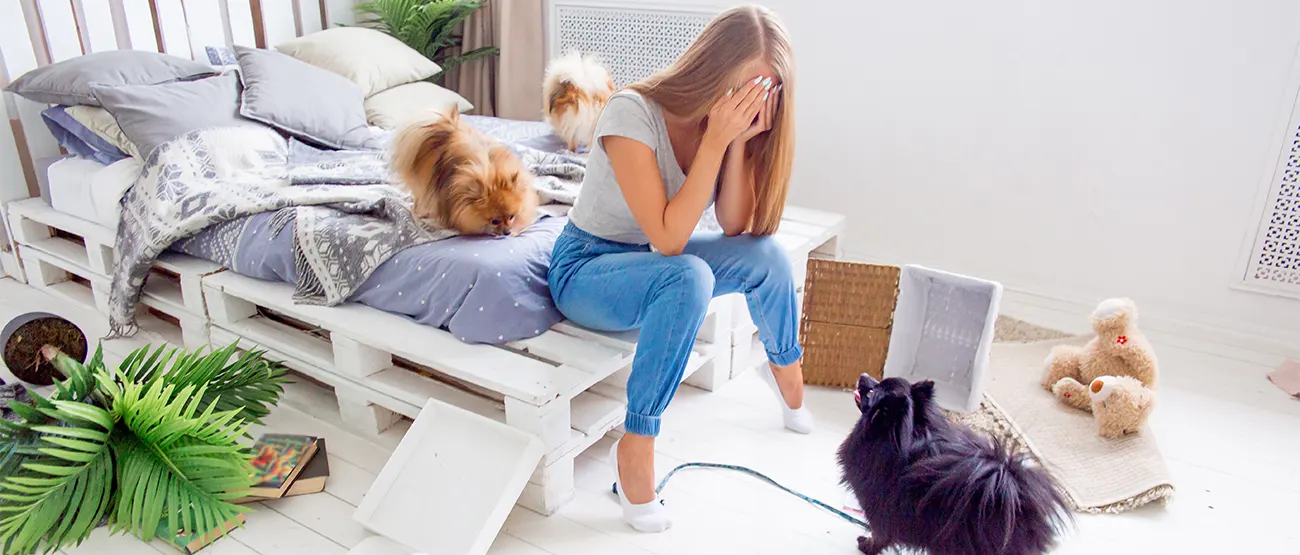
Does your dog bark, howl, pace, become destructive or show signs of distress when you leave the house? Bark Busters provides personalised separation anxiety dog training in Guildford, helping owners understand their dog's behaviour and develop practical strategies to help them become more comfortable when left alone.
I'm Jacquie, your local Bark Busters accredited Grand Master Dog Behaviour Therapist and Trainer. I work with you and your dog in your home, where separation anxiety behaviour occurs, so we can review your dog's routines, environment, and behaviour, and develop a training programme suited to your individual circumstances.
What Is Separation Anxiety in Dogs?
Some dogs struggle to be left alone for various reasons, and barking or causing damage when left alone doesn't necessarily mean they have separation anxiety.
A dog experiencing separation distress may become anxious when they realise their owner is preparing to leave or shortly after being left.
Signs can include barking or howling, whining, pacing or restlessness, scratching at doors or windows, destructive behaviour, toileting indoors, excessive salivation or panting, refusing food when alone, following you constantly around the home, becoming unsettled when you prepare to leave and frantic behaviour when you return.
Some dogs show only mild signs, while others can become extremely distressed.
Understanding what your dog actually does when left alone is an important first step.
Why Does My Dog Struggle When Left Alone?
There isn't a single reason dogs develop separation anxiety. Changes in routine, moving home, changes within the household, past experiences, limited experience being left alone, or a particularly strong dependence on a person can all contribute.
Rescue dogs can sometimes struggle after moving into a new home, while puppies may simply not yet have learned that being alone is safe and temporary.
Sometimes a previously settled dog begins struggling unexpectedly. If your dog's behaviour changes suddenly, especially if they also show other behavioural or health changes, speak to your vet to rule out pain or an underlying medical issue.
Is It Really Separation Anxiety?
This is an important question. A dog that barks when alone may be reacting to noises outside. A dog that chews furniture may be bored or under-stimulated. Toileting indoors can have behavioural or medical causes.
Some dogs struggle specifically when one particular person leaves, while others find any period of isolation difficult.
Where possible, observing or recording your dog's behaviour when you're out can provide useful information about what happens after you leave.
This helps us distinguish between possible separation problems and other behaviours that happen when your dog is alone.
Home Separation Anxiety Training in Guildford
Because the problem occurs at home, home-based training is particularly valuable.
I can look at your dog's normal environment, daily routine, and relationships with household members.
We'll look at factors such as: how your dog behaves before you leave, how your dog responds to keys, shoes or other departure cues, how long your dog can currently cope alone, where your dog settles, whether your dog follows you from room to room, exercise and daily routines, how departures and arrivals are handled, whether particular noises or outside activity trigger barking, and what happens when you return.
We can then develop a practical programme appropriate for your dog.
How Our Separation Anxiety Training Works
Understand what happens when you leave - We'll discuss your dog's behaviour before, during and after periods alone and identify patterns that may be contributing to the problem.
Establish a calmer routine - Predictability can help some dogs feel more secure. We'll look at your dog's everyday routine and identify changes that may support calmer behaviour.
Build independence at home - A dog that struggles to be separated from you, even when you're at home, may need help learning to relax without constantly following or interacting with you.
Work on departure triggers - Some dogs become anxious before their owner even leaves because they recognise signals such as picking up keys, putting on shoes, or reaching for a coat.
We'll look at whether these cues are contributing to your dog's behaviour.
Introduce manageable periods alone - Where appropriate, start alone-time training at a level your dog can cope with.
The aim isn't to leave a distressed dog for increasingly long periods in the hope that they eventually "get used to it". Progress should be gradual and appropriate for the individual dog.
Build duration progressively - As your dog becomes more comfortable, you can gradually increase time alone while monitoring their response.
Progress isn't always linear, so we may need to adjust the training programme based on how your dog responds.
My Dog Follows Me Everywhere
Some owners describe their dog as their "shadow". Your dog may follow you from room to room, lie against your feet and immediately get up whenever you move.
Following you isn't automatically a sign of separation anxiety. Many dogs simply enjoy being close to their owners.
However, if your dog finds even very short periods of separation difficult, the training programme may include building greater independence around the home.
Teaching your dog to relax while you're elsewhere in the house can be a useful foundation before working on longer absences.
My Dog Barks or Howls When Left Alone
Persistent barking or howling is one of the most common reasons owners ask for help. It can also create problems with neighbours.
The first step is understanding why your dog is vocalising. If the behaviour is related to separation distress, simply trying to stop the barking doesn't address the reason the dog is struggling.
We'll look at the circumstances surrounding the behaviour and develop a programme focused on helping your dog cope more comfortably with being alone.
My Dog Destroys Things When I Leave
Chewed door frames, damaged furniture, scratched doors, and torn-up belongings can happen when dogs are left alone.
However, destruction isn't always caused by separation anxiety. The location and timing of the behaviour can provide useful clues.
For example, damage concentrated around doors or exit points may have a different context from general chewing around the house.
If your dog is damaging objects in a way that could cause injury or lead to swallowing dangerous materials, put appropriate management in place immediately.
Separation Anxiety in Puppies
Learning to spend short periods alone is an important life skill for puppies.
It can be tempting to spend every minute with a new puppy, especially during the first few weeks at home.
However, gradually introducing appropriate periods of independence can help your puppy learn that being alone is a normal part of everyday life.
Puppy training can include settling independently, building a predictable routine, appropriate rest, toilet training, calm departures and returns, and gradually introducing short periods alone.
Training should be appropriate for the puppy's age and individual needs.
Separation Problems in Rescue Dogs
Moving into a new home can be a significant adjustment for a rescue dog. Some dogs settle quickly, while others need more time to become comfortable with new people, routines and surroundings.
If a rescue dog becomes highly attached to a new owner, it can be difficult to expect them to cope with long periods alone.
Establishing predictable routines and gradually building confidence and independence can help them settle.
Our rescue dog training in Guildford service can also help with other behavioural difficulties associated with settling into a new home.
Should I Let My Dog "Cry It Out"?
If a dog is genuinely distressed when left alone, I wouldn't recommend repeatedly leaving them until they stop vocalising. A dog becoming quiet doesn't necessarily mean they're comfortable.
Instead, aim to identify a level of separation your dog can currently manage and build from there.
This is one reason video monitoring can be useful: it lets you see what your dog is actually doing, rather than judging their behaviour only by what you hear when you leave or return.
Why Choose Bark Busters for Separation Anxiety Training in Guildford?
The reasons for separation anxiety can be complex, and circumstances vary considerably from dog to dog.
With Bark Busters, training is:
Personalised - Your programme is developed around your dog's behaviour and your household circumstances.
In your home - We work in the environment where the separation-related behaviour occurs.
Practical - You'll learn techniques and routines you can continue using between lessons.
Progressive - We can adjust training based on your dog's response, rather than pushing progress too quickly.
Designed for everyday life - We'll develop strategies that need to work with your real routine, not just during a training session.
Get Help With Separation Anxiety in Guildford
Whether your dog struggles with short absences, barks when you leave, or becomes extremely distressed when left alone, I'll help you understand what's happening and develop practical strategies for your dog.
If your dog becomes anxious when you leave, simply avoiding leaving them for a long time doesn't address the underlying problem.
Understanding your dog's behaviour, building independence, and gradually introducing manageable periods alone can help your dog feel more comfortable when you're not there.
Contact Bark Busters Guildford to discuss your dog's behaviour and find out more about personalised separation anxiety dog training in Guildford.
Frequently Asked Questions on Separation Anxiety
Can separation anxiety in dogs be improved?
Many dogs can make progress with an appropriate training and management programme, although the time required varies considerably. Gradual training at a level the dog can cope with is usually more appropriate than suddenly expecting them to tolerate long absences.
How do I know if my dog has separation anxiety?
Signs can include barking, howling, pacing, destruction, toileting, excessive salivation and distress around departures. However, these behaviours can have other causes, so it's important to understand what actually happens when your dog is alone.
How long should I leave my dog during separation anxiety training?
There isn't one duration that works for every dog. Start at a level the individual dog can manage without becoming excessively distressed, then progress gradually.
Should I punish my dog for destroying things while I'm out?
No. Punishment after you return is unlikely to help your dog understand what you want and won't address separation anxiety. Instead, focus on understanding why the behaviour occurs and developing an appropriate training plan.
Can puppies develop separation anxiety?
Some puppies can struggle when they are left alone, especially if they haven't gradually learned how to build their independence. Introducing manageable periods alone can be an important part of puppy training.
Can rescue dogs have separation anxiety?
Yes, although being a rescue dog doesn't automatically mean a dog will develop separation anxiety. Changes in home, routine, and attachment can influence behaviour, so some rescue dogs may need additional support to learn to settle alone.
Should I speak to my vet about my dog's separation anxiety?
If the behaviour appeared suddenly and has become particularly severe, your dog is at risk of injuring themselves, or you have concerns about your dog's health or welfare, your vet can investigate medical factors and support any underlying medical conditions.
My Trustpilot Reviews and Customer Testimonials
4.9 / 5 from 64 reviews
Very helpful to understand why my dog is like he is. Hoping that with the training we have been given to try we can make him a much happier quieter little dog .
Very good.
Greatly improved our puppy's behaviour with dietary and behavioural advice given by Jackie.