
Rescue Dog Training Guildford
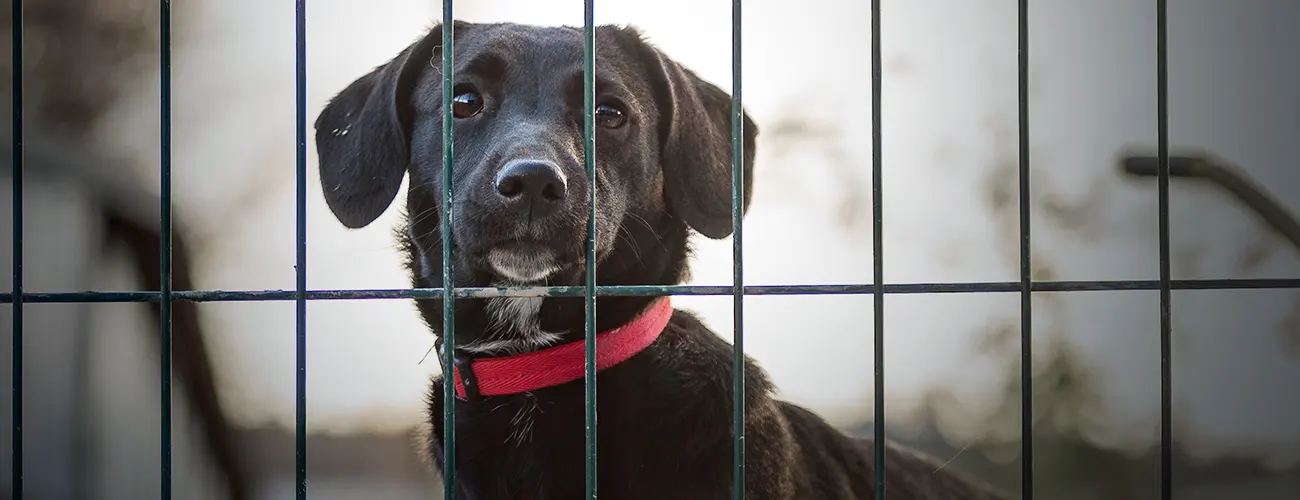
Bringing a rescue dog into your home can be incredibly rewarding, but it can also bring unexpected challenges. Your new dog may need time to adjust to unfamiliar people, routines, surroundings and expectations.
Bark Busters provides personalised rescue dog training in Guildford to help you understand your dog's behaviour, build communication, and lay the foundations for a calmer life together.
I'm Jacquie, your local Bark Busters certified Grand Master Dog Behaviour Therapist and Trainer. I work with you and your rescue dog in your own home, where we can look at the behaviours you're experiencing and develop a practical training programme suited to your dog and household.
Settling Your Rescue Dog Into Their New Home
Every rescue dog is different. Some dogs walk into their new home and appear comfortable almost immediately. Others may be nervous, withdrawn or overwhelmed. Some appear settled initially but start showing unwanted behaviours days or weeks later.
This doesn't necessarily mean that anything has gone wrong.
Moving to a new home is a significant change for a dog. They may be adjusting to new people, smells, sounds, routines, other pets and an entirely different environment.
Structure, consistency, and appropriate training can help your dog understand what is expected of them as they get used to their new life.
Common Behaviour Problems in Rescue Dogs
Rescue dogs can experience the same behaviour problems as any other dog, but their history may be incomplete or unknown.
I can help with behaviours including pulling on the lead, poor recall, barking, reactivity towards dogs or people, fearful or nervous behaviour, separation anxiety problems, resource guarding, jumping up, destructive behaviour, toileting problems, aggressive behaviour, problems around visitors, difficulty living with another dog, and general obedience and household boundaries.
Instead of assuming every problem stems from your dog's past, we'll focus on the behaviour you're seeing now and the circumstances in which it occurs.
Understanding Your Rescue Dog
It's natural to wonder what happened to your dog before they came to live with you.
Sometimes you'll have detailed information about their previous home. In other cases, you may know very little.
We don't build a training plan around assumptions about an unknown past. Instead, we can concentrate on what your dog is communicating now.
We'll look at their body language, behaviour, triggers, routines and responses so you can better understand when your dog feels relaxed, uncertain, frustrated or overwhelmed.
That gives us a practical starting point for training.
Home Rescue Dog Training in Guildford
Home training can be particularly useful for a recently adopted dog. Your home is where your dog learns how everyday life works: where to settle, how to behave around visitors, how to respond to you and what routines to expect.
Working at home also lets me understand your dog's behaviour in their normal environment, rather than only seeing how they behave in a training class.
My training can also address situations outside the home, including lead walking, recall and reactions towards other dogs or people.
How Our Rescue Dog Training Works
We discuss your dog's behaviour - We'll start by reviewing your dog's history, how long they've been with you, and any behaviour problems you're experiencing.
We look at your dog's new environment - I'll review your dog's routines, household, interactions, and the situations where problems occur.
We improve communication - I'll help you understand your dog's body language and show you practical ways to communicate clearly and consistently.
We work on the behaviours that matter to you - Your programme can include settling, recall, lead walking, barking, reactivity or another behaviour depending on your dog's individual needs.
You practise between lessons - You'll have clear techniques to practise, so training becomes part of everyday life rather than something that happens only during lessons.
We adapt as your dog settles - A rescue dog's behaviour can change as they become more comfortable in their new home. Training can therefore adapt as new behaviours or challenges emerge.
How Long Does It Take a Rescue Dog to Settle?
There isn't a fixed timetable. You may hear rules suggesting that every rescue dog takes a certain number of days, weeks or months to adjust. These can be useful reminders that settling takes time, but dogs don't follow an exact schedule.
One dog may become comfortable quickly. Another may need considerably longer.
Instead of focusing on a deadline, look for changes in your individual dog.
Are they beginning to relax? Are they sleeping comfortably? Are they eating normally? Are they becoming interested in their surroundings? Are they beginning to understand the household routine?
These observations tell you more about your dog's progress than an arbitrary number of days.
Building a Routine for Your Rescue Dog
A predictable routine can help a newly adopted dog understand what happens in their new home.
Where possible, keep feeding, toilet opportunities, walks, rest and sleep, training, time alone, household boundaries, and interactions with family members consistent.
This doesn't mean every day has to be identical. The aim is to make everyday life understandable as your dog adjusts.
Introduce new experiences gradually to avoid overwhelming your dog.
Meeting every family member, visiting busy places, and meeting multiple dogs in the first few days may be too much for some dogs.
Give your dog time to settle in.
Rescue Dogs and Separation Anxiety
Some rescue dogs become extremely attached to their new owner and struggle when that person leaves.
Others may already be accustomed to spending time alone.
If your dog follows you everywhere, becomes anxious when you prepare to leave, barks or howls when alone, or becomes destructive during absences, there may be separation anxiety problems.
Instead of suddenly leaving your dog for long periods, we can help your dog build independence and introduce manageable periods alone.
For more specific help, see our separation anxiety dog training in Guildford service.
Reactive Rescue Dogs
A rescue dog may bark, pull or lunge towards other dogs, people, vehicles or other triggers.
This behaviour is often described as reactivity.
Don't assume that your dog's reaction automatically means they are aggressive or that something bad must have happened in their past. Fear, frustration, excitement, uncertainty and previous learning can all influence reactive behaviour.
We'll look at your dog's individual triggers and body language, then develop practical strategies to manage everyday encounters.
Our reactive dog training in Guildford service provides more detailed help with these behaviours.
Recall Training for Rescue Dogs
Reliable recall is particularly important before giving a newly adopted dog greater freedom outdoors.
Even if you've been told that your rescue dog has good recall, remember that their relationship with you and their understanding of their new environment are still developing.
Start in a secure environment and gradually introduce distractions as your dog's response improves.
Don't rush into off-lead freedom simply because your dog appears settled at home.
Lead Walking With a Rescue Dog
Some rescue dogs may have had little lead training before. Others may pull because they are excited, worried or highly interested in their surroundings.
Lead training can improve communication and make walks more enjoyable.
We look at your dog's behaviour rather than simply trying to physically prevent them from pulling.
Resource Guarding in Rescue Dogs
Some dogs guard food, toys, chews, beds or stolen objects.
If your rescue dog growls when you approach something they value, avoid forcibly taking the object or repeatedly testing whether they will react.
Growling is an important warning signal, and simply suppressing it doesn't address the root cause.
Appropriate management and training can help address the underlying behaviour while reducing unnecessary confrontation.
See our resource guarding dog training in Guildford page for more information.
Rescue Dogs and Aggressive Behaviour
Always take growling, snapping, lunging, or biting seriously.
However, having a rescue dog doesn't automatically explain aggressive behaviour.
We'll look at when the behaviour occurs, what appears to trigger it, and what your dog's body language tells us.
If your dog has bitten or attempted to bite someone, put appropriate safety measures in place immediately and seek professional advice.
Our dog aggression training in Guildford service provides more information on working with aggressive behaviour.
Don't Try to "Test" Your Rescue Dog
During the settling-in period, avoid deliberately putting your dog in difficult situations just to see how they'll react.
For example, you don't need to immediately find out whether your dog is comfortable in a crowded pub, at a busy park, meeting many unfamiliar dogs, around large groups of visitors, having food or toys taken away, or being handled extensively by strangers.
You'll learn more about your dog gradually. Good management gives your dog the chance to build confidence without repeatedly being pushed beyond what they can currently handle.
Rescue Dogs and Children
If you have children, manage introductions and interactions carefully.
Teach children to give a newly adopted dog space, particularly when the dog is eating, sleeping, or resting.
Never leave young children unsupervised with a dog.
If your rescue dog growls, guards, snaps, or shows other concerning behaviour towards a child, create appropriate separation and seek professional help as soon as possible.
Why Choose Bark Busters for Rescue Dog Training in Guildford?
A rescue dog doesn't need a generic programme just because they have been adopted.
They need training appropriate for their individual behaviour.
With Bark Busters, training is:
Personalised - We develop your programme around your dog and the behaviours you're experiencing.
In your home - We work in the environment where your dog is learning to settle and live with you.
Practical - You'll learn techniques you can incorporate into everyday life.
Focused on communication - I'll help you better understand your dog's body language and communicate more clearly.
Flexible - Training can adapt as your dog settles in and their behaviour changes.
Get Help With Your Rescue Dog in Guildford
Adopting a rescue dog starts a new relationship. You don't need to know everything about their past to start helping them build a successful future with you.
Whether you've recently adopted your dog or have had them for some time and are struggling with a particular behaviour, I'll help you understand what's happening and develop practical strategies to move forward.
With clear communication, sensible routines, and appropriate training, you can help your dog understand their new home and build the skills they need for everyday life.
Contact Bark Busters Guildford to discuss your dog's behaviour and find out more about personalised rescue dog training in Guildford.
Frequently Asked Questions about Rescue Dogs
How long should I give my rescue dog to settle?
No fixed period applies to every dog. Some settle quickly, while others need considerably longer. Concentrate on your dog's individual behaviour and progress rather than expecting them to follow a predetermined timetable.
When should I start training my rescue dog?
You can start training and establishing routines from the start, but the intensity should suit your dog. Early training can focus on communication, routine, settling and simple everyday skills without overwhelming them.
Should I let my rescue dog off the lead?
Don't rush off-lead exercise until you've developed a reliable recall and understand how your dog responds to distractions. Use an appropriately secure environment while building these skills.
Why has my rescue dog's behaviour changed after a few weeks?
Some dogs behave differently as they adjust to an unfamiliar environment. As they become more comfortable, different behaviours may emerge. This doesn't necessarily mean the adoption is failing; it may simply mean you're beginning to see more of your dog's normal behaviour.
Can you help a nervous rescue dog?
Yes. We can adapt training for dogs that are worried or lacking confidence. Don't force a nervous dog into overwhelming situations to make them "get used to it".
Can you help with a reactive rescue dog?
Yes. We'll look at your dog's triggers, body language and the situations in which they react and develop an appropriate training and management programme.
What if my rescue dog has bitten someone?
Prevent further opportunities for a similar incident by using appropriate safety precautions and seek professional help as soon as possible. Veterinary advice may also be appropriate to rule out pain or medical conditions.
My Trustpilot Reviews and Customer Testimonials
4.9 / 5 from 64 reviews
So helpful and encouraging
Very helpful...very kind and understanding Brilliant with Rusty.
Very helpful to understand why my dog is like he is. Hoping that with the training we have been given to try we can make him a much happier quieter little dog .