
Sibling Rivalry Dog Behaviour Training in Solihull
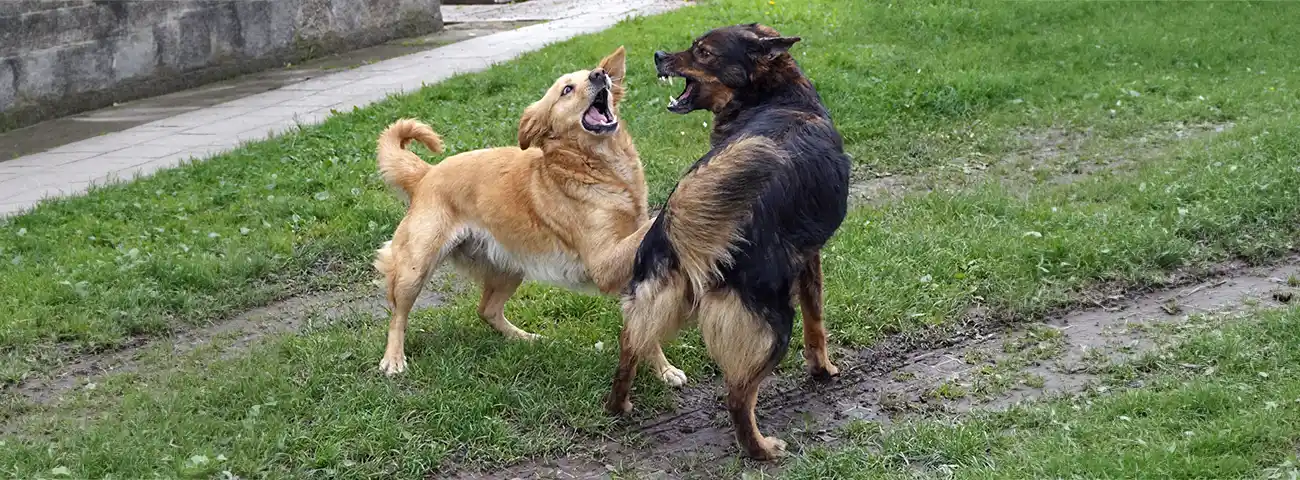
Help When Dogs in the Same Home Don't Get Along
If your dogs fight, snap or constantly compete with each other, you're not alone. Sibling rivalry is common in multi-dog households.
Maybe they get along most of the time, but suddenly become aggressive around food, toys, beds, attention from people, or fight around certain areas of the home. Tensions can gradually increase, and you're now worried that one dog could seriously hurt the other.
Bark Busters provides one-to-one sibling rivalry and dog behaviour training in Solihull, helping dog owners understand why problems occur between dogs living in the same household.
Training takes place in your home and surrounding areas, allowing us to look at the situations where the fighting actually occurs and develop practical strategies for your individual dogs.
What Is Sibling Rivalry Between Dogs?
Sibling rivalry is a term commonly used when dogs living together compete or show aggression towards each other. The dogs don't necessarily have to be actual siblings.
The problem can occur between two puppies from the same litter or different litters, adult dogs, an older and younger dog, dogs that have lived together for years, newly introduced dogs, male and female dogs, and dogs of different breeds or sizes.
Conflicts and fighting can happen occasionally or can become a regular part of daily life.
Signs Your Dogs May Be Struggling to Live Together
You may notice growling at each other, staring or stiffening, snapping, chasing, fighting, guarding food, beds or other items, competing for attention, blocking access to people or rooms, squabbles in doorways, one dog repeatedly bullying another, and fights that appear to happen without warning.
Sometimes the warning signs are subtle before a fight occurs, and understanding these signals can help you identify potential problems earlier.
Why Are My Dogs Fighting?
There isn't one single reason dogs living together suffer from sibling rivalry.
Disagreements can involve food, toys, attention from owners, sleeping areas, access to particular rooms, excitement, frustration, fear or anxiety, changes within the household, competition between dogs, previously learned experiences, or differences in age or energy levels.
A behaviour that looks like “jealousy” or rivalry may have a different underlying cause. That's why Bark Busters focuses on understanding the individual dogs and the circumstances surrounding their interactions.
Dog Behaviour Training in Your Own Home
Sibling rivalry mainly happens within the household, so home-based dog behaviour training allows us to assess the environment where the problem occurs.
We can look at how your dogs interact around food, or how they play together. We look at how your dogs greet you and other visitors, how they interact around toys and other items, what happens when resting, going through doorways, in the garden, and in their daily routines.
This provides a more complete picture than simply observing the dogs in an unfamiliar training environment.
Resource Guarding Between Dogs
Resource guarding is one potential reason why dogs living together may come into conflict.
If your dogs are fighting over resources, it is important to understand what is triggering the behaviour rather than simply punishing the dog that appears to start the conflict.
Bark Busters can also help with resource guarding training in Solihull as part of a wider behaviour programme.
Competing for Your Attention
Some dogs tense when another dog approaches. One dog may push between you and the other, growling when the other dog receives attention, or become increasingly more demanding when, in the dog's eyes, you are showing favouritism.
What looks like jealousy may actually involve competition, insecurity, guarding, or other learned behaviours.
Understanding the circumstances can help you establish clearer routines and expectations for both dogs.
When Dogs Suddenly Start Fighting
Sometimes dogs that have lived together peacefully for years suddenly begin fighting. Don't automatically dismiss a change in behaviour as a simple disagreement between the dogs.
Changes in routine, environment or relationships can contribute to the behaviour changes. If your dog's behaviour has changed suddenly or significantly, it may be worth ruling out any possible physical or medical problems with your vet first. Bark Busters can assess the behaviour problems and help you understand how your dogs interact.
Communication Through Voice, Tone, and Body Language
At Bark Busters Home Dog Training Solihull, we believe effective training starts with clear communication. Dogs constantly respond to our voice, tone, and body language, often noticing signals that we don't realise we're giving.
We teach dog owners how to communicate more clearly and consistently with their dogs to establish appropriate boundaries within everyday situations.
With multiple dogs, consistency is really important. Clear communication, less unintentional favouritism, and predictable routines can reduce confusion and make it easier for each dog to understand what is expected.
What Should I Do If My Dogs Fight?
If your dogs are fighting, safety comes first. Avoid putting your hands between fighting dogs or attempting to physically grab them during a serious altercation, as you could be injured.
You may need to manage the situation while we assess the underlying behaviour problem. Depending on the circumstances, this can include separating your dogs around food, high-value resources or other known triggers.
If either dog has been injured, you should see your vet as soon as possible.
If there has been a bite or you are concerned that someone could be injured, professional behaviour support is important.
What Happens During Sibling Rivalry Training?
We understand the history - We discuss how long the dogs have lived together, when the problems started, and what situations cause them.
We observe the dogs - We look at how the dogs interact with each other and with the people around them.
We identify potential triggers - We look at the resources, routines, environments and interactions that may contribute to tension.
We establish practical management - You learn how to manage the situations safely while working towards improving your dogs' behaviour.
We teach clearer communication - You'll learn how to use your voice, tone, and body language consistently with both dogs.
You continue the training at home - The aim is to give you practical techniques that can become part of your normal household routine.
Can Dogs That Fight Learn to Live Together?
Sibling rivalry is a very serious problem and affects every aspect of your daily life. You're probably constantly on edge, wondering whether you've shut the door, the gate, or other barriers that keep your dogs apart.
In many cases, improving your dogs' relationship involves more than just trying to stop them from fighting.
Our focus may include:
Identifying triggers - Understanding what causes tension between the dogs.
Managing resources - Reducing opportunities for competition over food, toys, spaces or people.
Improving communication - Helping dog owners recognise and respond to the dogs' behaviour.
Creating clearer routines - Making everyday interactions more predictable.
Building appropriate behaviour - Encouraging dogs to respond more appropriately around each other.
Resolving the problems depends on the right approach, the individual dogs and the severity of the fighting.
Why Choose Bark Busters Solihull?
One-to-one behaviour training - Your dogs are assessed within their own household rather than a generic group setting.
Training at home - We work where the sibling rivalry actually occurs.
Individual approach - Training is tailored to your dogs, their relationship, and your household.
Practical strategies - You learn how to manage everyday situations more effectively.
Clear communication - We focus on voice, tone, and body language to help you communicate consistently.
Support as you continue - You'll receive guidance and support to help you implement the training at home. Sibling rivalry can be complex and take time to resolve. Our Bark Busters Support Guarantee provides ongoing help and support and gives you peace of mind that your trainer will return, free of charge, to support you throughout your training.
Get Help With Dogs That Don't Get Along
Living with dogs that regularly fight can be very stressful for the whole household. You may find yourself constantly separating them, removing toys, feeding them in different rooms or worrying about what might happen when you're not watching.
Bark Busters Solihull provides one-to-one home dog behaviour training to help you understand the problems between your dogs and develop practical strategies for managing and improving their behaviour.
If your dogs are struggling to live together, contact Bark Busters Solihull to discuss the problem and arrange your home behaviour training.
Frequently Asked Questions
Why are my dogs suddenly fighting?
Several factors can cause this, including changes in routine, resource guarding, competition, frustration, anxiety, or changes in the dogs' relationship. A sudden change in behaviour may also warrant a veterinary check.
How do I stop my dogs fighting?
Safety should always come first. When possible, avoid physically intervening in a fight and separate the dogs safely. Talk to a professional behaviour expert to understand the underlying causes.
Can Bark Busters help with dogs that fight each other?
Yes. Bark Busters provides one-to-one home behaviour training for dogs that are struggling to live together.
Why do my dogs fight over food?
Food can become a valuable resource that one or both dogs want to protect. Resource guarding and competition around feeding can contribute to conflict.
Can dogs that have lived together for years start fighting?
Yes. Changes in the household, environment, routine or the dogs themselves can sometimes contribute to the new behaviour.
Should I punish one dog for attacking the other?
Punishing a dog after a fight does not address the cause of the behaviour and may make the problem worse by increasing anxiety or tension. Understanding the underlying behaviour is more useful.
Do you train both dogs?
Yes. The approach depends on the individual circumstances. We assess the dogs and their interactions, then tailor the training to the household and both dogs.
My Trustpilot Reviews & Customer Testimonials
5 / 5 from 58 reviews
Kirsty's training was straightforward and easy to understand. Her demonstration of training tips was an eye-opener and her assistance in getting me to try the same tactics was invaluable.
Really happy,very professional,only been a week but vast improvements already.
Absolute game changer. In three hours I went from feeling totally out of control and stressed to feeling hopeful. Our two dogs were proving to be very hard work and the barking was constant. Since Kirsty arrived they have only barked a handful of times. I wish…