
Lead Pulling Dog Training Guildford
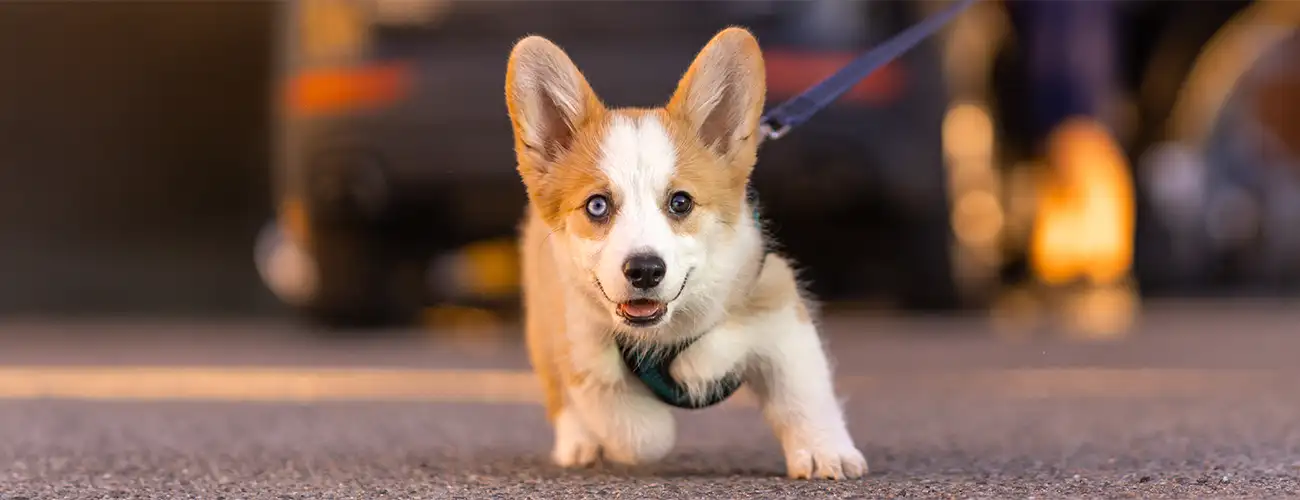
Does your dog pull you down the road, surge ahead as soon as you leave the house or make every walk feel like a battle? Bark Busters provides personalised lead-pulling dog training in Guildford to improve communication with your dog and help you develop calmer, more manageable walks on lead.
I'm Jacquie, your local Bark Busters certified Grand Master Dog Behaviour Therapist and trainer. I work with you and your dog in your own home and everyday environment, helping you understand why your dog pulls and showing you practical techniques you can use on your daily walks.
Why Does My Dog Pull on the Lead?
Dogs can pull for many different reasons.
For some dogs, the explanation is simple. Pulling gets them where they want to go.
If moving forward on a tight lead repeatedly gets them to an interesting smell, another dog, or the park, the behaviour can become well established.
Other dogs may pull because they are excited to get outside, distracted by smells, trying to reach another dog or person, frustrated by being restrained, worried about something nearby, walking faster than their owner, highly stimulated by the environment, or unclear about what is expected of them.
Understanding why your dog pulls helps us decide the best way to approach the behaviour.
Loose-Lead Walking Training in Guildford
Good lead walking isn't simply about physically preventing your dog from pulling.
The aim is to help your dog learn to walk with you on a relaxed lead and respond to your communication, even with everyday distractions.
We'll work on the skills you need to make walks calmer and easier to manage.
This could include leaving the house calmly, improving your dog's attention, walking on a loose lead, changing direction, responding to your guidance, managing distractions, passing people and dogs appropriately, reducing rushing and surging ahead, and improving communication between you and your dog.
The exact programme will depend on your dog's behaviour.
Lead Training in Your Home and Local Area
Bark Busters training begins at your home. This helps because lead training and pulling often start before the walk has even begun.
Some dogs get highly excited when they see their lead, rush through the doorway, and start the walk already over-excited.
We'll look at the complete routine rather than concentrating only on what happens once you're halfway down the road.
Where appropriate, training can then continue in the environment where you normally walk your dog. This lets us work with the real distractions you encounter, rather than relying solely on exercises in a training class.
How Our Lead Pulling Training Works
Understand why your dog pulls - We'll look at when the pulling occurs, what your dog is trying to reach and how they respond to different situations.
Start before leaving the house - A calmer walk can begin at home. We'll look at your dog's behaviour around getting ready, putting on the lead and leaving through the door.
Improve communication - I'll show you practical ways to communicate with your dog so they better understand where you want them to walk and what you expect of them.
Teach loose-lead walking - We'll practise helping your dog stay with you rather than continually pulling ahead.
Introduce everyday distractions - As your dog's skills improve, training can incorporate the people, other dogs, smells and distractions you encounter on normal walks.
Keep practising - Loose-lead walking is a skill. Consistent practice helps your dog understand that the same expectations apply from one walk to the next.
My Dog Pulls as Soon as We Leave the House
For some dogs, pulling begins the moment the front door opens.
They can rush to the pavement, pull toward their favourite route, or get so excited about the walk that it's hard to get their attention.
Instead of treating the doorway as the point where training stops and the walk begins, we make it part of the training.
Teaching your dog to leave the house more calmly can create a much better starting point for the rest of the walk.
My Dog Pulls Towards Other Dogs
Pulling towards another dog isn't always simply a loose-lead walking problem.
Your dog may be excited and desperate to greet, frustrated because the lead prevents them from approaching, or worried and trying to respond to the other dog.
If your dog also stares, barks, growls or lunges when another dog appears, we need to look at the wider behaviour rather than treating it only as pulling.
Our reactive dog training in Guildford service is designed for dogs that show strong reactions towards dogs, people or other triggers.
My Dog Pulls Towards People
Some dogs want to greet everybody they meet. While this may seem friendly, pulling towards strangers can make walks difficult and intimidate people who aren't comfortable around dogs.
Training can help your dog learn that seeing another person doesn't automatically mean they should rush towards them.
The goal is to help your dog remain responsive to you despite the distraction.
My Dog Pulls to Sniff Everything
Sniffing is a normal and important part of being a dog. Loose-lead training doesn't mean preventing your dog from ever stopping to investigate their environment.
Instead, we want a walk where you and your dog can communicate with each other.
Your dog can sniff and explore without learning that dragging you toward every interesting smell gets them there.
What Should I Do When My Dog Pulls?
One of the most important principles is consistency. If pulling sometimes gets your dog where they want to go and sometimes doesn't, they may struggle to understand what is expected.
Avoid turning the walk into a constant physical battle. Instead, training should help your dog learn which behaviour allows the walk to continue successfully.
The right technique depends on your individual dog, so seeing the behaviour in person helps us choose the right approach.
Should My Dog Walk at Heel for the Entire Walk?
Not necessarily. For most family dogs, a more practical goal is walking on a loose lead, responding to their owner, and walking through normal environments without constantly pulling.
Sometimes, closer heel walking is needed, such as when passing people or navigating a busy area. At other times, your dog can have more freedom to sniff and explore appropriately.
The objective is control and communication, not expecting your dog to maintain a competition-style heel throughout every walk.
What Equipment Should I Use?
Many collars, harnesses, and leads are available, but equipment alone isn't a substitute for training. Equipment may make a dog physically easier to manage, but your dog still needs to learn what you want them to do.
The equipment should be safe, appropriate for your dog, and fitted correctly.
I'll discuss suitable options with you during training, where necessary.
Lead Pulling and Puppies
Starting lead training early can prevent pulling from becoming an established habit.
Puppies are naturally curious, and everything is new, so they get distracted easily. Expecting perfect lead walking right away isn't realistic.
Instead, puppy lead training can focus on getting comfortable wearing appropriate equipment, paying attention to you, following your movements, walking on a loose, relaxed lead, remaining responsive around mild distractions, and building good habits gradually.
For wider puppy behaviour support, see our puppy training in Guildford service.
Lead Pulling and Rescue Dogs
A recently adopted rescue dog may have had little previous lead training, or they may simply be overwhelmed by their new environment.
They need time to learn and adjust to their new routines. Don't assume that a rescue dog pulling means they are deliberately ignoring you.
Establishing communication, routine and consistent expectations can help your dog learn how walks work in their new home.
Our rescue dog training in Guildford service can help with lead walking, along with other settling-in and behaviour issues.
Why Choose Bark Busters for Lead Pulling Training in Guildford?
Lead pulling can have different causes, so I look at each dog individually rather than applying the same solution to every case.
With Bark Busters, training is:
Personalised - Your programme is based on your dog's behaviour and the situations in which they pull.
Practical - We work on skills you can use during your normal walks.
Focused on communication - You'll learn how to communicate more clearly with your dog.
Relevant to your environment - Where appropriate, we can work with the real-life distractions you encounter locally.
Designed for everyday life - The aim is a dog that is easier and more enjoyable to walk, not just one that performs during a lesson.
Enjoy Calmer Walks With Your Dog
Whether your dog pulls from the moment you leave the house, drags you towards other dogs, or simply hasn't learned to walk comfortably on a loose lead, I'll help you understand the behaviour and develop practical techniques to improve your walks.
Walking your dog should be something you can both enjoy.
If every walk involves pulling, dragging or struggling to keep your dog's attention, personalised training can help you understand what's driving the behaviour and show your dog a better way to walk with you.
Contact Bark Busters Guildford to discuss your dog's behaviour and learn more about personalised lead-pulling dog training in Guildford.
Frequently Asked Questions on Lead Pulling
Can you train a dog to stop pulling on the lead?
With appropriate training and consistent practice, dogs can learn to be calm and walk on a loose lead. The approach may vary depending on why the individual dog is pulling.
Why does my dog pull even though I stop them every time?
If your dog has practised pulling for a long time, the behaviour may be well established. They may also be highly motivated by whatever they are trying to reach. Training should teach your dog the behaviour you want, rather than relying only on physically stopping them.
Why does my dog only pull when they see another dog?
This may indicate excitement, frustration, fear, or lead reactivity rather than a general loose-lead walking problem. Looking at your dog's full response to other dogs helps you choose the most appropriate training approach.
Should I stop my dog sniffing on walks?
No. Sniffing is normal dog behaviour. The aim is to teach your dog that they can explore when appropriate without dragging you toward everything that interests them.
Can you help if my dog is very strong?
Yes. Training can improve communication with your dog and improve behaviour on the lead regardless of size. However, safely fitted equipment is especially important with powerful dogs.
Can you help a puppy learn to walk on the lead?
Yes. Puppyhood is an excellent time to introduce loose-lead walking and build good habits before pulling becomes a habit.
How long does it take to stop a dog pulling?
There's no one-size-fits-all timetable for every dog. Age, previous learning, motivation, environment, and how consistently you practise training can all affect progress.
My Trustpilot Reviews and Customer Testimonials
4.9 / 5 from 64 reviews
So helpful and encouraging
The first lesson was definitely an eye opener . The training tips and advice on the first visit has already generated some improvements in behaviour .looking forward to further sessions to better our interactions with our dog. Credit to Jacquie who clearly kno…
Very good